Top Benefits of Custom 3D Printing Services
- Gopi Krishna
- Jan 10
- 4 min read

In recent years, custom 3D printing services have transformed the way industries approach design and manufacturing. From prototyping to final products, the ability to create tailored solutions has become a game-changer for businesses across various sectors. This blog post will explore the top benefits of utilizing custom 3D printing services, showcasing how they can enhance efficiency, reduce costs, and foster innovation.
Understanding Custom 3D Printing
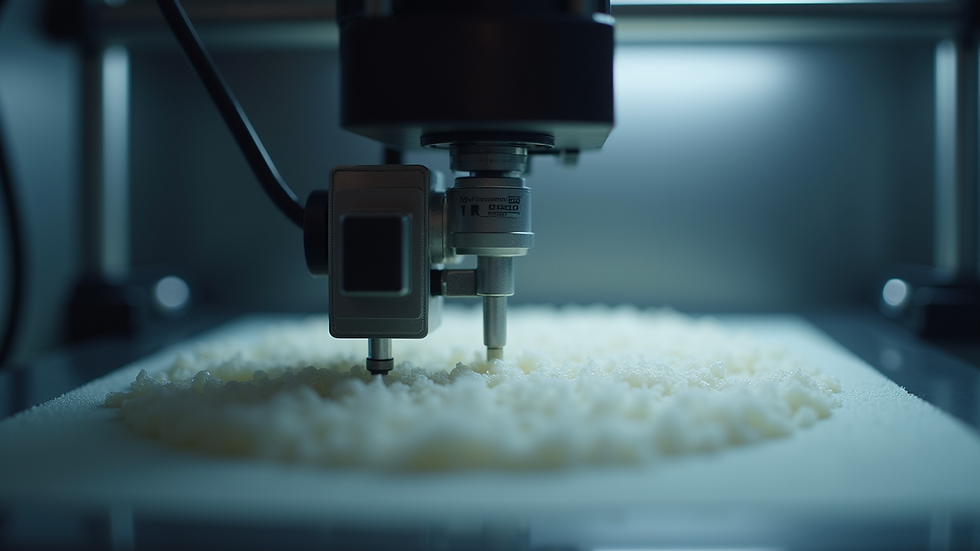
Custom 3D printing, also known as additive manufacturing, involves creating three-dimensional objects from a digital file. This process allows for the production of intricate designs that would be difficult or impossible to achieve with traditional manufacturing methods. The technology has evolved significantly, enabling businesses to produce everything from prototypes to end-use products with remarkable precision.
The Evolution of 3D Printing Technology
The journey of 3D printing began in the 1980s with the development of stereolithography. Since then, advancements in materials and techniques have expanded its applications. Today, industries such as aerospace, automotive, healthcare, and consumer goods leverage 3D printing to streamline their operations.
Key Benefits of Custom 3D Printing Services
1. Enhanced Design Flexibility
One of the most significant advantages of custom 3D printing is the design flexibility it offers. Traditional manufacturing methods often impose limitations on design complexity due to tooling and production constraints. In contrast, 3D printing allows for:
Complex geometries: Create intricate shapes that are lightweight yet strong.
Customization: Tailor products to meet specific customer needs or preferences.
Rapid iteration: Quickly modify designs based on feedback without incurring high costs.
For example, in the aerospace industry, companies can design lightweight components that improve fuel efficiency while maintaining structural integrity.
2. Cost-Effective Prototyping
Prototyping is a critical phase in product development, and custom 3D printing significantly reduces costs associated with this process. Traditional prototyping methods often require expensive molds and tooling. With 3D printing, businesses can:
Reduce material waste: Print only what is necessary, minimizing excess materials.
Shorten lead times: Produce prototypes in days instead of weeks, accelerating the development cycle.
Lower production costs: Eliminate the need for costly tooling and setup.
A case study from a leading automotive manufacturer demonstrated that switching to 3D printing for prototyping reduced costs by over 50%, allowing for faster market entry.
3. Streamlined Production Processes
Custom 3D printing can streamline production processes by enabling on-demand manufacturing. This approach offers several benefits:
Reduced inventory costs: Produce items as needed rather than maintaining large inventories.
Localized production: Manufacture products closer to the end-user, reducing shipping costs and time.
Simplified supply chains: Minimize reliance on multiple suppliers and logistics providers.
For instance, a medical device company used 3D printing to produce surgical instruments on-site, significantly reducing lead times and costs associated with outsourcing production.
4. Improved Product Performance
The ability to create optimized designs through custom 3D printing can lead to improved product performance. By utilizing advanced materials and design techniques, businesses can achieve:
Weight reduction: Create lighter products without sacrificing strength.
Enhanced functionality: Integrate multiple components into a single print, reducing assembly time and potential failure points.
Tailored materials: Use specific materials that enhance performance characteristics, such as heat resistance or flexibility.
In the sports industry, companies have developed custom 3D-printed footwear that provides better fit and performance, leading to increased customer satisfaction.
5. Sustainability and Environmental Impact
As businesses strive to become more sustainable, custom 3D printing offers a path toward greener manufacturing practices. Key sustainability benefits include:
Reduced waste: Additive manufacturing generates less waste compared to subtractive methods.
Sustainable materials: Many 3D printing materials are recyclable or biodegradable.
Energy efficiency: 3D printing often requires less energy than traditional manufacturing processes.
A furniture company that adopted 3D printing for its designs reported a 30% reduction in material waste, contributing to its sustainability goals.
Real-World Applications of Custom 3D Printing
Aerospace Industry
In the aerospace sector, companies like Boeing and Airbus utilize custom 3D printing to produce lightweight components that enhance fuel efficiency. By creating complex geometries that traditional methods cannot achieve, these companies can reduce the weight of aircraft, leading to significant fuel savings.
Healthcare Sector
The healthcare industry has embraced custom 3D printing for creating patient-specific implants and prosthetics. For example, surgeons can use 3D-printed models of a patient's anatomy to plan complex surgeries, improving outcomes and reducing recovery times.
Automotive Industry
Automakers are increasingly using custom 3D printing for both prototyping and production. Companies like Ford have implemented 3D printing to produce parts for their vehicles, allowing for rapid design changes and reduced production costs.
Consumer Goods
In the consumer goods sector, brands are leveraging 3D printing to create personalized products. From custom phone cases to tailored jewelry, businesses can offer unique items that cater to individual preferences, enhancing customer engagement.
Challenges and Considerations
While the benefits of custom 3D printing are substantial, there are challenges to consider:
Material limitations: Not all materials are suitable for 3D printing, which can restrict design options.
Quality control: Ensuring consistent quality across prints can be challenging, particularly for complex designs.
Initial investment: The cost of 3D printers and materials can be high, especially for small businesses.
Despite these challenges, the advantages often outweigh the drawbacks, making custom 3D printing a valuable investment for many organizations.
Future Trends in Custom 3D Printing
As technology continues to evolve, several trends are shaping the future of custom 3D printing:
Advancements in materials: New materials, including composites and bio-materials, will expand the range of applications for 3D printing.
Integration with AI: Artificial intelligence will enhance design processes, enabling smarter and more efficient production.
Increased accessibility: As costs decrease, more businesses will adopt 3D printing, democratizing access to advanced manufacturing technologies.
These trends indicate a promising future for custom 3D printing, with the potential to revolutionize industries further.
Conclusion
Custom 3D printing services offer a multitude of benefits that can enhance efficiency, reduce costs, and foster innovation across various sectors. By embracing this technology, businesses can achieve greater design flexibility, streamline production processes, and improve product performance. As the industry continues to evolve, the potential for custom 3D printing to transform manufacturing practices is immense.
If you are considering integrating custom 3D printing into your operations, now is the time to explore the possibilities and take advantage of this innovative technology.


Comments